

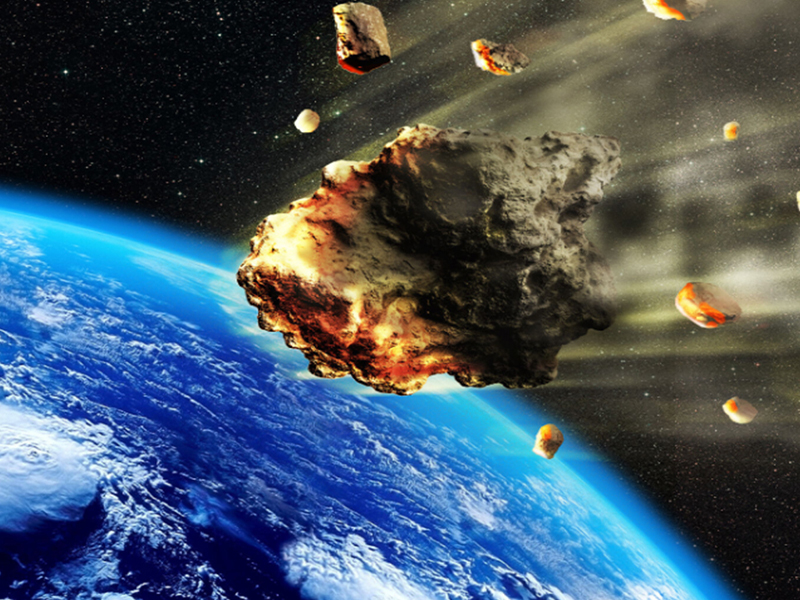
In a groundbreaking discovery, astronomers have detected water molecules on the surface of two asteroids in the main asteroid belt between the orbits of Mars and Jupiter. This finding challenges the traditional view of asteroids as dry remnants from the early solar system, suggesting they may play a role in delivering water and other essential elements to planets.
The research, published in The Planetary Science Journal on Monday, utilized the Stratospheric Observatory for Infrared Astronomy (Sofia), a retired aerial telescope mounted on a modified Boeing 747SP. The telescope, equipped with the Faint Object infraRed CAmera for the Sofia Telescope (FORCAST) instrument, examined asteroids Iris and Massalia, both situated over 223.1 million kilometres from the sun.
Previously, evidence of hydration on these asteroids had been observed, but the source of the hydration was uncertain. Lead study author Dr Anicia Arredondo explained that Sofia’s observations definitively confirmed the presence of water on the S-class asteroids, challenging the previous assumption that they were entirely dry.
The discovery is significant as it supports the theory that asteroid impacts on Earth might have contributed to the delivery of water and other vital elements during the planet’s early stages. This development comes after Sofia’s earlier detection of water molecules in a large crater on the moon in 2020, showcasing the telescope’s contribution to unravelling mysteries in our solar system.






Leave a Reply